
- Writing Tips
10 Myths New Writers ACTUALLY Believe (finally BUSTED)
Lorem ipsum dolor sit amet, consectetur adipiscing elit, sed do eiusmod tempor incididunt ut labore et dolore magna aliqua.

- Interview by Srishti
- Published Oct 28, 2026
- 11mins
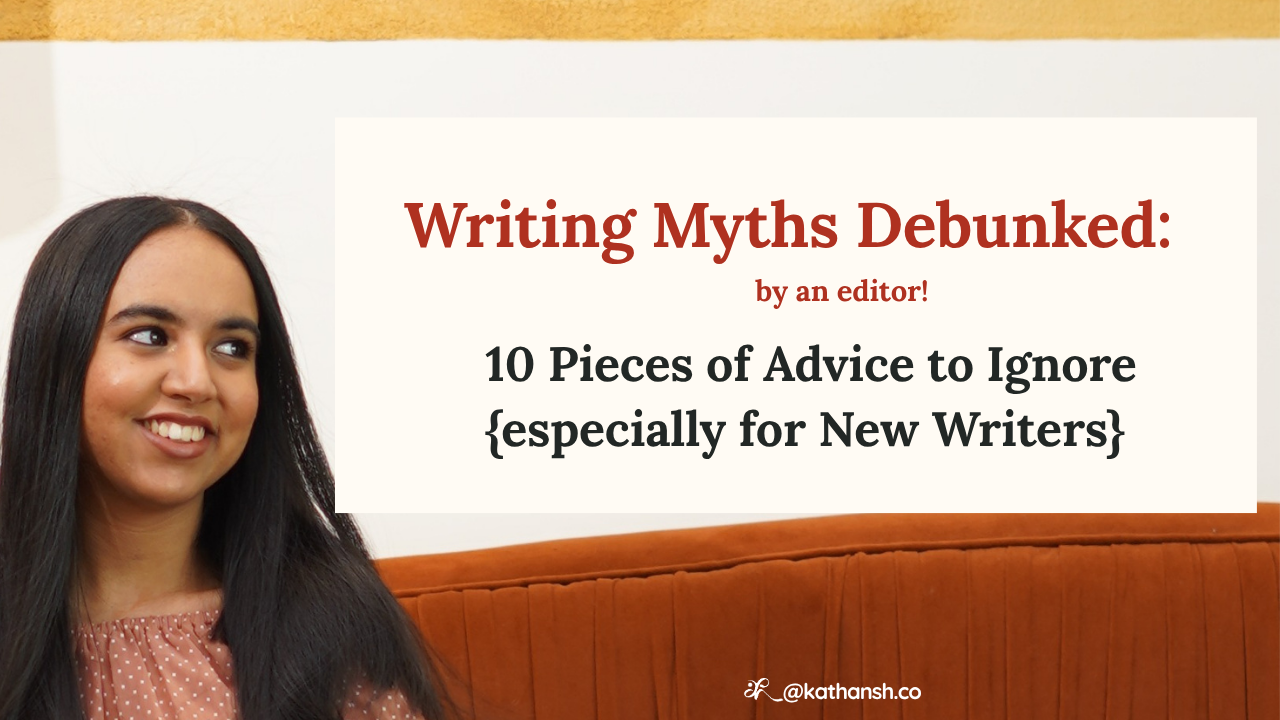
Hey friends,
If you’re a new writer, welcome. I’m Srishti – writer, editor & story coach – and today, I’m busting 10 popular myths in the fiction writing space that most new writers actually end up believing in.
I work with writers every day, so I get to hear a lot of stuff swimming in their heads… and even if you’re a seasoned author, I’m sure you’ll catch at least one of these to be on your list.
Let’s go!
Writer’s Myth #1 –
“You need to establish the genre of your story before you can write it.”
A common writing advice says that you need to know what genre your story belongs to before or during the writing process.
This is a huge myth, something that I wish I knew sooner.
But here’s the truth: the purpose of genre is to provide a label that conveys the primary patterns & emotions readers can expect to experience in this novel.
So in short, the genre of a book is supposed to help the reader decide whether or not they might buy the book. It is a label for the reader.
This means the genre comes in handy when you’re trying to sell the book.
Not when you’re trying to write the book.
You first need to write the story you want to tell.
And then, leave it for your publisher to establish which genre they might want to sell it in.
Even if you’re self publishing, you only need to worry about the genre during the publishing process, once you reach that stage.
If you try to reverse engineer this process of nailing your genre and forcing a story out of it, that would mess up the actual essence of your story and your writing process.
Writer’s Myth #2 –
“Plot driven stories are better than character driven stories.”
If you believe that your plot needs to be the driving force of your story, you couldn’t be more wrong.
Because your plot is only the road on which your reader will travel through the course of the book… but your character is the vehicle through which your reader will experience the journey.
In simpler terms, your plot is about “what happens & how it happens” but the story should be about “how what happened affects the characters & changes them through the course of time”
… which in turn personally affects the reader and connects them with intended emotions you want to experience.
So in my opinion, plot driven stories are not even stories.
They’re just random assortment of events that seem exciting on the surface but are actually quite shallow.
To prove this, I urge you to make a list of 10 stories you really love. Notice… what’s the one common thread.
It’s not going to be the events of the book, but rather your connection with the characters. You cared about what would happen to these people & that’s why you loved the story.
Feel free to tell me in the comments if you disagree with this one because I know it’s controversial.
Writer’s Myth #3 –
“You need to write every single day in order to be a writer.”
This is a very common writing advice out there {and even I have suggested this to some people specifically}, so let me explain why it’s a myth and where the exception lies.
No matter what, writing is an artistic activity.
If you try to put it in the zone of a regular 9-5, then you’ll most likely take out all the enjoyment out of the process.
Therefore, you don’t need to be writing every single day.
In my opinion, you can call yourself a writer as long as you always come back to writing stories at some point. This time period may vary for every writer & that’s okay. Unless you’ve decided never to write again, you don’t have to stop being a writer.
If you write, you’re a writer. Full stop!
But Srishti, didn’t you say you’d suggested writing every day to some writers?
Yup, my advice was specifically for new writers who are not confident in their skills.
So as a new writer, if you write every day, you’ll get more comfortable with the writing process & you’ll gain the much needed practice to improve at the skill.
But once you get into it and the lay the foundation, you do NOT need to be constantly writing every single day forever to call yourself a writer.
Writer’s Myth #4 –
“You need to be good at English language to be a good writer.”
This is absolute rubbish that many new writers believe in, especially writers whose first language is not English. As an Indian editor, I get this question all the time.
Now it’s true that most writers are good at English (if that’s the language they write in) but that’s only true because they have practiced writing a lot & they have eventually gained that skill.
But those language skills are never a pre-requisite for you to be a good writer.
You only need to have a great story.
And the passion to learn enough storytelling techniques, so you can convey your story to the world.
Plus this is the whole reason editors exist.
You’re supposed to hire line/copy editors to fix and polish your language {ensuring it’s still your voice}.
As editor myself, I’ve worked with quite a few author clients with amazing stories with not-so-great English. That’s completely normal.
Writer’s Myth #5 –
“The first page is the most important page of your book.”
I’m sure you’ve heard this advice from so many writers but it’s just not true {at least not entirely}.
Yes, your first page is important because it needs to act as a strong opening hook that pulls your reader into the story.
But what’s more important is the overall experience that your readers enjoy inside the story from first page to last page.
The journey definitely matters way more than the opening hook!
For example, recently I was reading Stephen King’s newly released novel A Fairytale. And I absolutely loved the opening hook which raised my expectations soo much, but somehow after the inciting incident (i.e. to say 70-ish pages into the book), I felt a bit meh…
Not that I’m expert enough to pass a judgement on Stephen King’s writing (he is phenomenal for a reason) but for that specific book didn’t just hit the cord with the reader within me… and I ended up not finishing it.
So, take this as your reminder: your first page is not the make or break factor. It’s the journey inside.
🌿 I agree that if you’re querying agents for traditional publishing, then the first few pages can feel like a make or break situation {and I won’t lie, they actually are}… but I don’t want you to get caught up in polishing the first chapter so much that the rest of the book feels meh in comparison to it.
Yes, work hard on that opening… but make sure the full story lives up to the expectations you set with your killer hook!
Writer’s Myth #6 –
“You must have a degree in literature or Creative Writing to be a writer.”
I often get this question because I am pursuing a degree in creative writing right now.
But do you even NEED a degree?
Absolutely not!
There are so many awesome writers out there, from various backgrounds & cultures, who have written masterpieces and sold millions of bestsellers.
Now would a degree be useful to you?
The answer is kinda complicated.
I’d say it depends on your aim with your writing, the resources you have {and are willing to spend}, the amount of time you’re realistically able to give to your writing… among a few other logistical things.
But if I have to give a straight answer, I’d say this —
A degree in writing is NEVER necessary for you to be a writer, but if you have the means for it {without going into heavy debt} and you’re able to get the opportunity to study storytelling full-time, do it. You’ll never regret it in this lifetime!
🌿 Want me to write a dedicated blog post talking all about my experience inside my MFA Creative Writing program at University of San Francisco? Let me know in the comments 🙂
Writer’s Myth #7 –
“You need to sell a million copies to be a good writer.”
This is a myth almost every writer believes, myself included, and it took me a lot of time to identify this as a myth & understand the real concept.
The process of writing a story is a form of art… whereas the process of selling a story is a form of business.
So when you become a writer, you will face the writer mode (when you’re writing the story) & then you’ll face the author mode (when you’re selling the story).
People tend to merge these two & try to judge the capability of one based on the consequences of the other.
So, let me say this straight:
Your ability of selling your book does NOT define your ability to write the book.
That’s why never judge your self worth as a writer based on the number of books you have sold.
Writer’s Myth #8 –
“Plot twits are necessary in a story.”
Until very recently, I used to think that to write a good story, you need to have at least one big plot twist. If not many.
This is not true.
‘cause as I learnt in my MFA Creative Writing program, there are so many great stories that do not have a single plot twist.
The plot twists are supposed create a dramatic surprise in the reader’s mind… but what if you could do the same using other ways of building suspense?
I understood this after I read tons of literary fiction books, and noticed how they used other tools like suspense, foreshadowing and character investments to build that same dramatic surprise for the reader without necessarily it being a plot twist.
If you’re confused, that’s okay. Maybe I should write a full blog post on type of suspense with examples from real stories?! Ooh, I’m excited already… tell me in the comments if you want me to do this one.
Writer’s Myth #9 –
“You need to have a 100 percent unique original plot.”
Every time a writer tells me they have a unique plot, I can’t control my laughter.
Because nothing in our story world is really original.
Everything new has been inspired by something that has been written before.
Now I’m not saying that writers are stealing stories, nope.
It’s just that all good stories have certain human emotions & deal with certain human situations.
Even the fantasy stories deal with real world human emotions that humans are supposed to relate to.
And since all writers are humans {but if you’re a vampire reading this, please DM me ;}…. there will always be the overlap of ideas and expressions.
Hence, I say writing should never be about boasting a completely unique story no one can ever think of.
It’s about presenting your personal take on a specific topic that specific people can relate to in the most hardest hitting ways possible. That’s what makes your story stand out {while also belonging to the others in the same category}.
Writer’s Myth #10 –
“You need to outline the entire story before you write.”
This has to be the most widely accepted myth. Because even I believed in it years ago when I was new to writing.
But while writing my second novel, I realized that I’m the kind of writer who likes to change things as I go. That’s why if I outline every plot point, then I may be wasting my time in the long term.
Now of course there are writers who love the process of outlining so much that they outline every single plot point before they start writing & if that works for you, go ahead.
But for most writers, especially newbies, outlining can feel overwhelming.
That’s why, when I became an editor & story coach, I packaged my unique outlining method {that blends structure of outlining with the creativity of discovery writing} into my signature workshop Idea To Outline.
If you’ve struggled with outlining at any point or sometimes wish you could have a writing process that gave you some kind of structure but with enough creative freedom… then Idea To Outline is right for you.
Save your spot now!
Watch on YouTube:
If you want to me to talk you through these, check out this YouTube video I made on the same topic and don’t forget to subscribe once you’re there!
Related Posts
10 Things to Do After You Finish Your First Draft & Begin Self-Editing Your Novel
Lorem ipsum dolor sit amet, consectetur adipiscing elit, sed do eiusmod tempor incididunt ut...

- Interview by Srishti
- 9mins
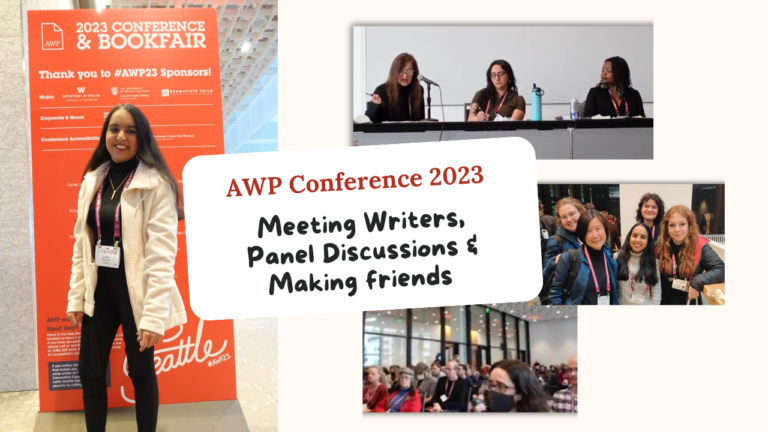
Book Promotions, Literary Agents & Query Letters: AWP 2023 Conference Notes & Lessons
Lorem ipsum dolor sit amet, consectetur adipiscing elit, sed do eiusmod tempor incididunt ut...
- Interview by Srishti
- 34mins
